Empower people, Enable participation
Mainio Tech provides modern, effective solutions for participation and collective decision-making. We are a team of participation experts at your service!

Every process has some sort of progression plan that defines the phases of the process. A participation process can, for example, consist of informing the participants about the upcoming process, collecting proposals, and finally creating plans based on the proposals that people can vote on. In this kind of example, the process would have four phases:
It is a good practice to define the process phases already when the process starts in order to make it clear for all stakeholders involved in the process how the process progresses and what are the key dates they should remember. This is extremely important also for the transparency of the process and the principle of being transparent.
Phases are also essential for administrators to define what the participants can do during each phase. In the example situation presented above, administrators could define, for example, that creating new proposals is only possible during the "Proposals" phase. It is also a good idea to inform the participants what is expected from them during each phase of the process. This can be done through the process phases section of the administration dashboard.
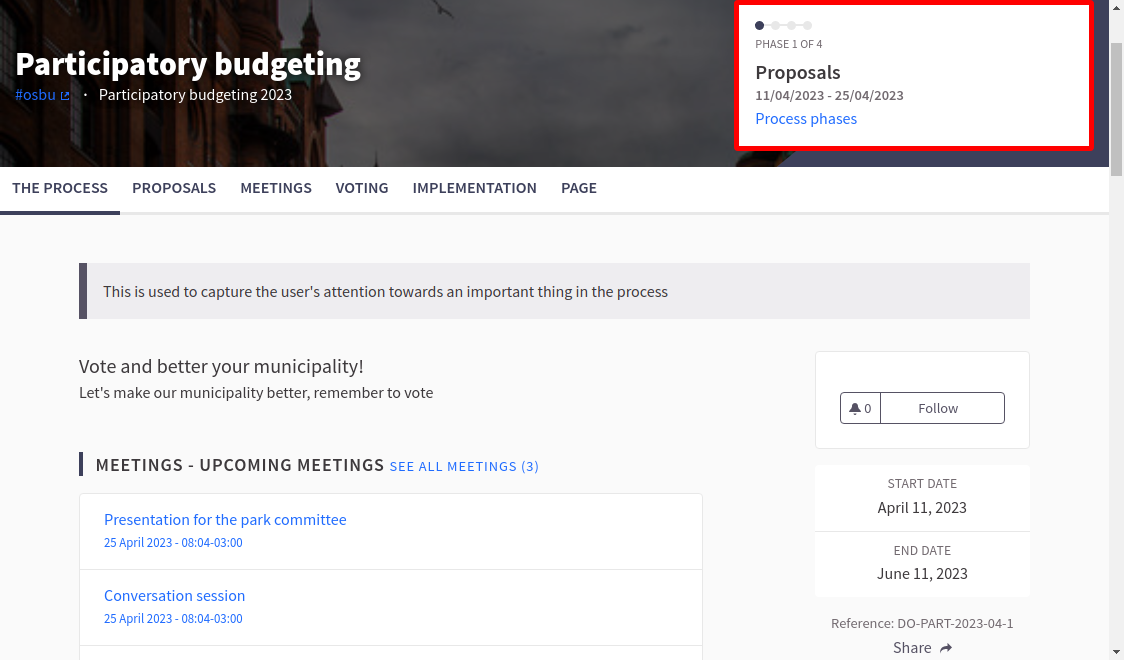
The active phase is shown at the top of the process pages, on the right side on top of the banner image. This area is highlighted in the image below. The "Process phases" link directs to the phases section of the process where participants can read more about the process phases.
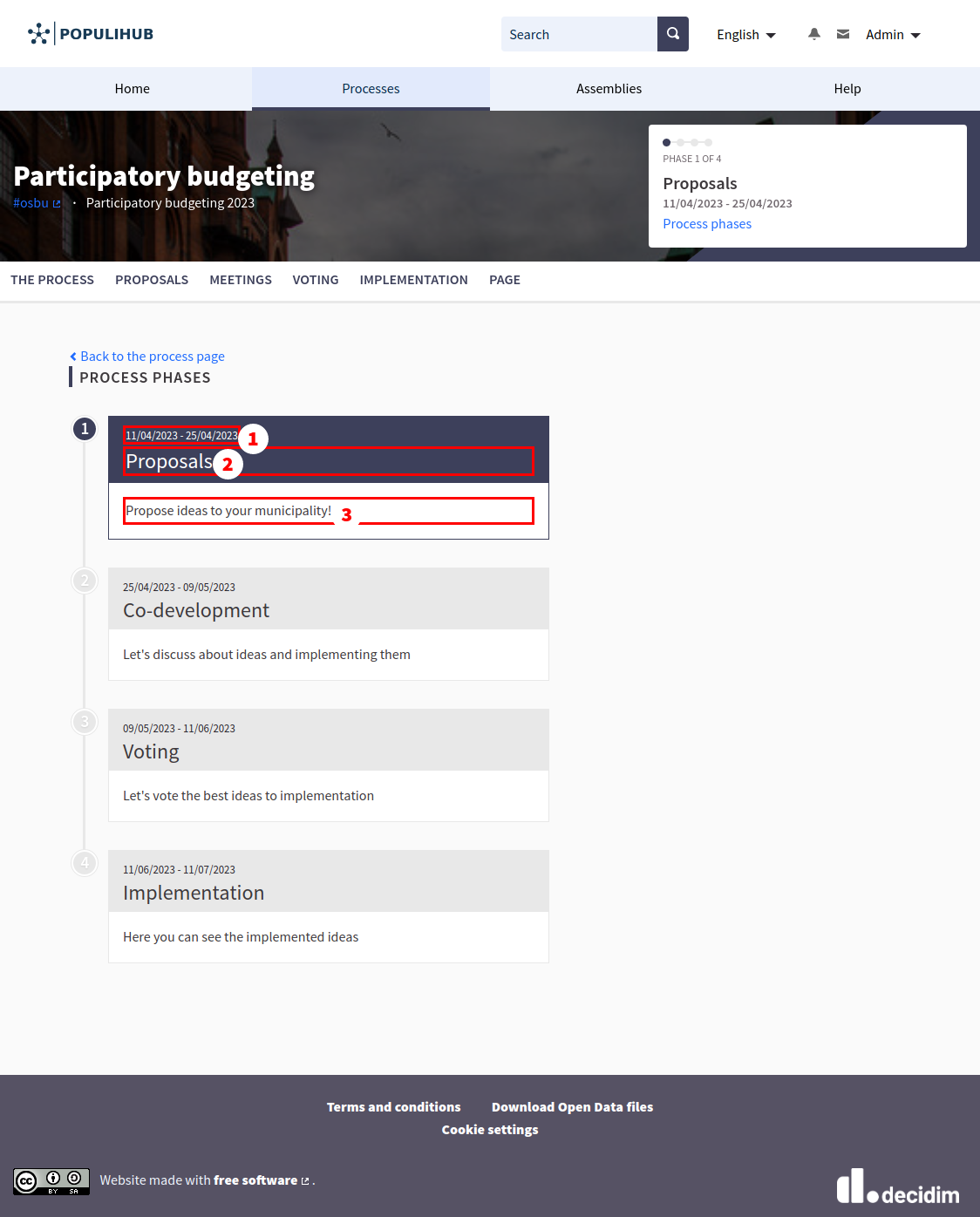
Each phase is listed separately on the process phases page, and the active phase is highlighted with the highlight color. This is presented in the image below. Each phase in the listing has a start and end date (highlighted with the number 1), a title (highlighted with the number 2) and a description (highlighted with the number 3).
There are some situations where the phases and dates of a process are not clear from the start, or even such situations that the process is continuous and does not have an end date or clear phases within the process. In these situations it should be considered whether an assembly could be a better option for the participation space. Assemblies are more flexible in regards of the structure although they are otherwise very similar to processes. More information about assemblies can be found from the Assemblies section of this manual.
All-in-one digital platform for all your participation needs. Easy-to-use and reliable, so you can spend more time engaging with people.

Mainio Tech provides modern, effective solutions for participation and collective decision-making. We are a team of participation experts at your service!